
News

Welcoming Bill Chu as Vice President of Product Application

Vytal Filtration Technologies has appointed Bill Chu as the new Vice President of Product Application. With over a decade of engineering experience and a U.S. patent for a filtration process, Bill is set to establish a new technical support group to bolster the company’s sales team’s expertise.

Read More

VYTAL Brand Launch

Proudly announcing the merger of four industry-leading filtration companies; Partnering with Hokanson Capital, Vytal Filtration Technologies emerges as the preeminent industry supplier. Vytal Filtration Technologies,

Read More
Newsletters

Liquid Cooling Filtration for Data Centers: Protecting AI & High-Density Computing Infrastructure

As artificial intelligence (AI) and high-performance computing continue to drive unprecedented rack densities and thermal loads, liquid cooling has become essential for modern data center infrastructure. While cooling technologies such as cold plates, immersion systems, and cooling distribution units (CDUs) receive significant attention, filtration is equally critical to maintaining reliable long-term system performance.

Contaminants within liquid cooling loops can reduce heat transfer efficiency, damage critical equipment, restrict flow, accelerate corrosion, and increase downtime risk. Effective filtration strategies help data centers maintain operational reliability, protect high-value infrastructure, and support scalable growth.

At Vytal Filtration Technologies, we provide filtration solutions designed specifically for demanding liquid cooling and process water applications across modern data center environments.

What Is Liquid Cooling in Data Centers?

Traditional air cooling systems are increasingly unable to manage the thermal demands generated by AI servers, GPUs, and high-density computing environments. Liquid cooling systems remove heat more efficiently by circulating coolant directly through or near heat-generating components.

Compared to air cooling, liquid cooling offers:

  • Higher thermal transfer efficiency
  • Reduced energy consumption
  • Support for higher rack densities
  • Improved cooling consistency
  • Lower operational costs in high-load environments

Modern liquid cooling infrastructure commonly includes:

  • Cooling Distribution Units (CDUs)
  • Heat exchangers
  • Chillers
  • Cooling towers
  • Pumps
  • Cold plates
  • Immersion cooling systems
  • Closed-loop circulation piping

These systems rely on clean, stable coolant circulation to operate effectively over long service intervals.

Why Does Filtration Matter in Liquid Cooling Systems?

Liquid cooling systems are highly sensitive to particulate contamination and corrosion byproducts. Even small amounts of debris can negatively impact cooling efficiency and equipment reliability.

Without effective filtration, contaminants may lead to:

  • Fouled heat exchangers
  • Restricted coolant flow
  • Reduced heat transfer efficiency
  • Cold plate blockage
  • Pump wear and seal damage
  • Instrumentation failure
  • Corrosion acceleration
  • Clogged spray nozzles
  • Increased maintenance frequency
  • Unplanned downtime


Understanding Data Center Cooling Loops

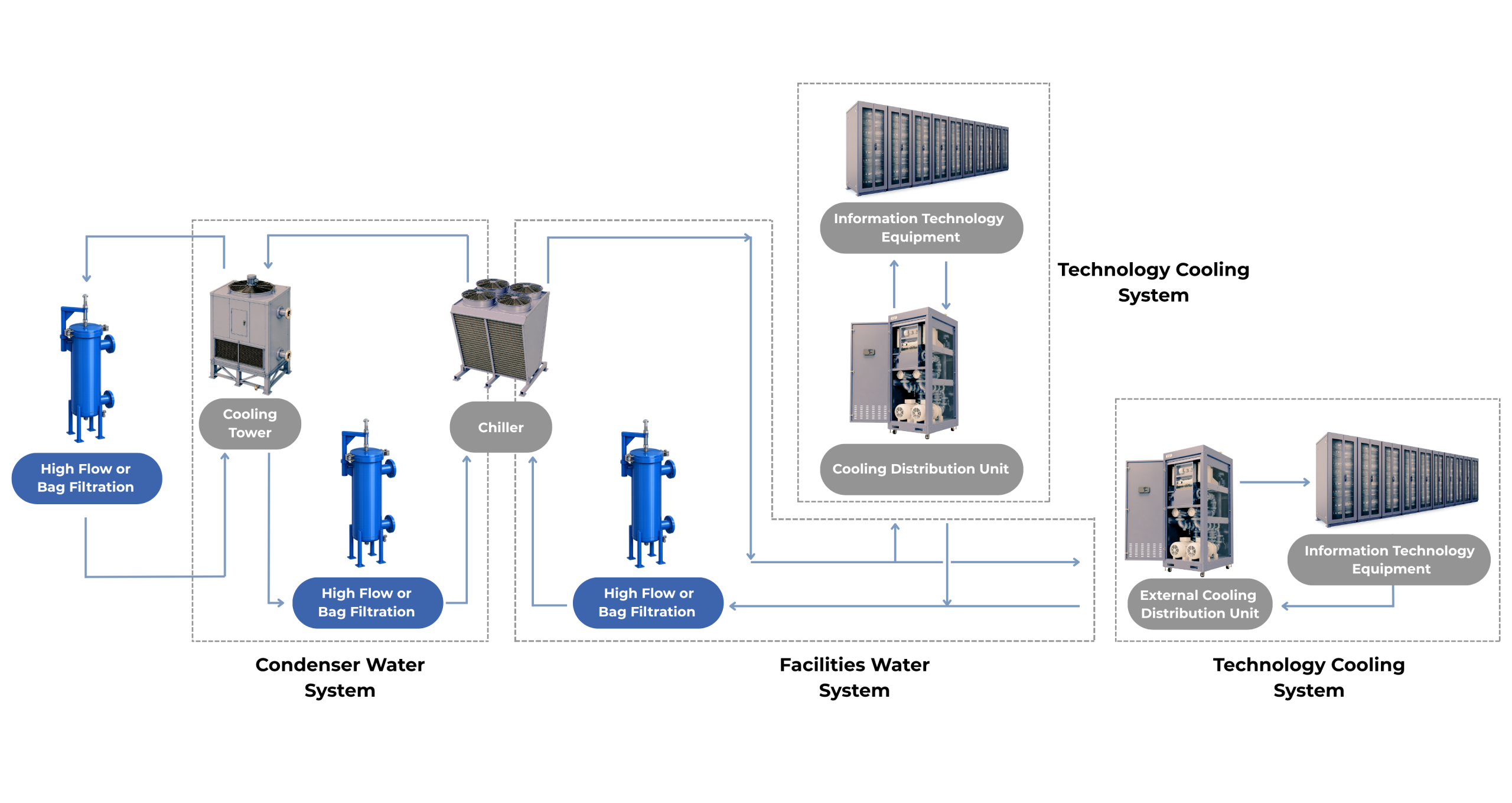
Most liquid-cooled data centers utilize three interconnected fluid circulation systems: the Technology Cooling System (TCS), Facilities Water System (FWS), and Condenser Water System (CWS). Each loop serves a distinct function within the cooling architecture and presents unique filtration requirements.

Technology Cooling System (TCS)

The Technology Cooling System circulates coolant directly to IT equipment, including CPUs, GPUs, and server racks.

Because this loop interfaces closely with sensitive electronics and cold plates, filtration requirements are typically the most stringent.

Facilities Water System (FWS)

The Facilities Water System transfers heat between the CDU and external cooling infrastructure using heat exchangers.

Condenser Water System (CWS)

The Condenser Water System circulates water between the chiller and cooling tower or fluid cooler, where heat is rejected to the atmosphere. 

Because cooling towers are exposed to the external environment, this loop typically experiences the highest contaminant loading.

Common Data Center Liquid Cooling Technologies

Cold Plate Cooling

Cold plate cooling uses liquid coolant flowing through metal plates mounted directly onto high-heat components such as CPUs and GPUs. This technology enables efficient heat removal in high-density server environments.

Immersion Cooling

Immersion cooling submerges servers in dielectric fluid that absorbs heat directly from the hardware before transferring it to an external cooling system.

Heat Exchangers, Chillers & Cooling Towers

Heat exchangers transfer heat between cooling loops, while chillers and cooling towers remove and reject heat from the overall system. These systems require reliable filtration to maintain long-term operating efficiency.

Micron Ratings and Filtration Selection for Liquid Cooling Systems

Selecting the appropriate filtration level is one of the most important decisions when designing or maintaining a data center liquid cooling system. Filtration that is too coarse may allow contaminants to damage sensitive equipment, while filtration that is unnecessarily fine can increase pressure drop, energy consumption, and maintenance requirements.

The ideal micron rating depends on the cooling loop, equipment sensitivity, coolant chemistry, flow rates, and overall system design but filters typically range from 0.5 micron to 50 micron, depending on the specific loop and water quality requirements.

Data Center Filtration Applications

Pre-Commissioning Filtration

Pre-commissioning filtration is critical during startup and commissioning phases to remove installation-related contaminants before systems become operational.

Benefits of pre-commissioning filtration:
  • Removes weld slag, iron oxide, and installation debris
  • Prevents premature equipment damage
  • Reduces startup-related downtime risks
  • Improves long-term system cleanliness
  • Supports reliable system commissioning


Continuous Loop Filtration

Continuous loop filtration provides ongoing particulate removal within circulation loops to maintain thermal performance and system cleanliness.

Benefits of continuous filtration:
  • Maintains heat transfer efficiency
  • Reduces fouling and scaling
  • Minimizes corrosion risks
  • Extends maintenance intervals
  • Protects pumps and instrumentation
  • Supports long-term uptime reliability


Cooling Tower Filtration

Cooling towers are exposed to environmental contaminants and accumulated solids that can negatively impact system performance.

Benefits of cooling tower filtration:

  • Removes suspended solids and debris
  • Minimizes buildup
  • Protects heat exchangers and chillers
  • Reduces clogged spray nozzles
  • Helps lower chemical treatment requirements


High Flow Filtration

High flow filtration systems are ideal for high-volume cooling applications requiring compact footprints and fine particulate removal.

Benefits of high flow filtration:

  • Supports flow rates up to 250 USGPM per unit
  • Fine filtration capabilities down to ≥0.5 micron
  • Compact footprint for space-constrained environments
  • Protects cold plates and heat exchangers
  • Improves system reliability and operational efficiency


Centralized / Non-CDU Filtration

In some facilities, space limitations or shared infrastructure may require centralized filtration systems rather than CDU-level filtration.

Benefits of centralized filtration:

  • Simplifies maintenance and monitoring
  • Supports shared Facilities Water Systems (FWS)
  • Protects critical cooling infrastructure
  • Reduces contamination circulation risks
  • Helps manage corrosion concerns in shared loops

Selecting the Right Filtration Strategy

From pre-commissioning cleanup and continuous loop filtration to cooling tower protection and centralized filtration systems, the right filtration strategy helps ensure reliable long-term performance across every cooling loop.

The ideal filtration strategy depends on multiple operational factors, including:

  • Cooling architecture
  • Flow rates
  • Coolant chemistry
  • Particulate loading
  • System pressure requirements
  • Rack density
  • Cooling tower exposure
  • Redundancy requirements
  • Maintenance accessibility

Recommended Solutions

The following filtration technologies help protect liquid cooling systems from contamination, improve reliability, and support efficient heat transfer across data center cooling loops:


Felt Filter Bags
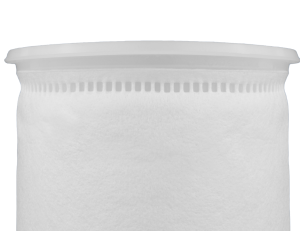
Available in a wide range of micron ratings, Felt Filter Bags provide cost-effective particulate removal across multiple cooling loop applications. They are often used for both startup and ongoing filtration requirements.


MBB Multi-Bag Bolted Cover Housings

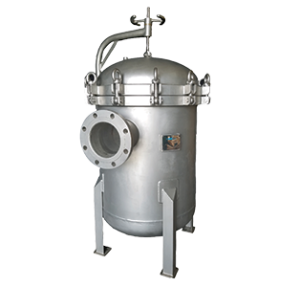
MBB Multi-Bag Bolted Cover Housings offer high dirt-holding capacity for applications with elevated contaminant loading. They are commonly used for pre-commissioning filtration, cooling tower filtration, and system cleanup.


High Flow Cartridge Filters
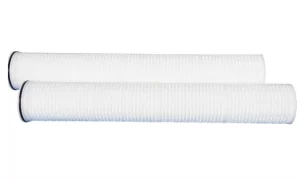
High Flow Cartridge Filters provide efficient particulate removal in high-volume cooling loops while minimizing equipment footprint and maintenance requirements. They are commonly used in continuous loop and centralized filtration applications.


IHF Industrial High Flow Housings
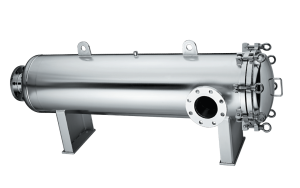
Designed for demanding industrial service, IHF Industrial High Flow Housings support high flow rates and large system volumes. Their compact design makes them well-suited for data center cooling infrastructure.


Properly specified filtration systems, including the right filtration technologies, micron ratings, and system configurations, help maximize heat transfer efficiency, extend equipment life, reduce maintenance costs, and ensure reliable operation in high-performance data center cooling applications.

Vytal Filtration Technologies provides filtration solutions to help data centers maintain clean cooling systems, maximize uptime, and protect critical assets throughout the lifecycle of their liquid cooling infrastructure.